
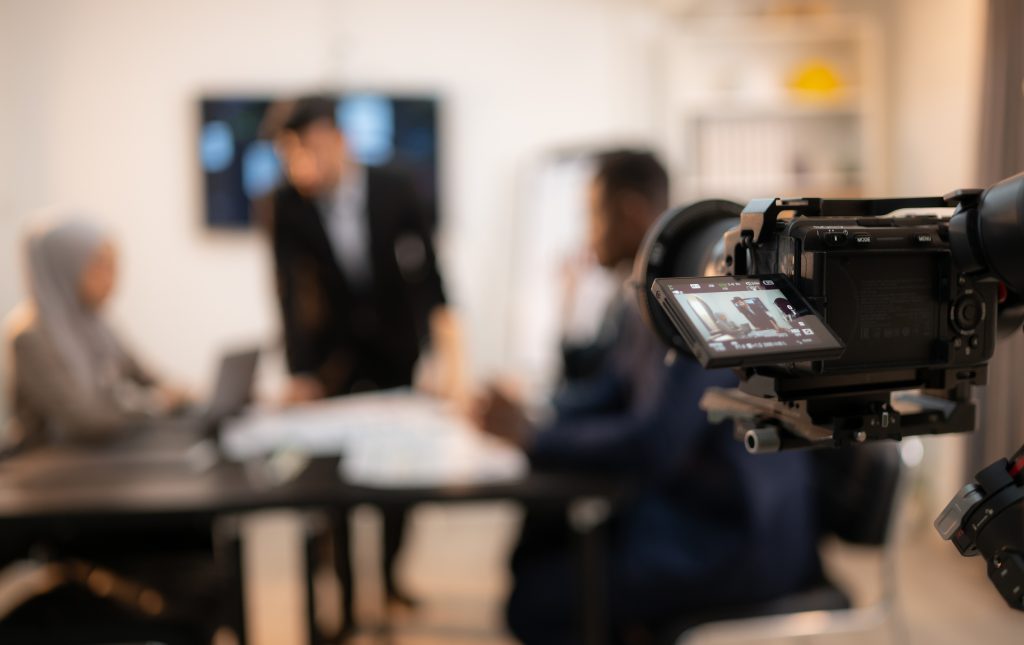
An examination for discovery allows the parties in a civil action to obtain information, assess the evidence, and narrow the issues before trial. A certified transcript provides an accurate written record of the questions and answers, but it cannot always convey how the testimony was delivered.
Filming an examination for discovery can preserve a witness’s voice, expressions, gestures, pauses, and overall presentation. Depending on the circumstances, these details may help counsel assess the witness, prepare litigation strategy, and present relevant evidence later in the proceeding.
Video recording is not necessary for every examination. However, when credibility, complex testimony, or a witness’s presentation may become significant, legal videography can offer valuable context beyond the written transcript.
What Does a Video Recording Capture?
A court reporter records the spoken testimony and produces the official transcript. A video records the visual and audio components of the examination, including:
- The witness’s tone and pace
- Facial expressions and gestures
- Pauses or hesitation before an answer
- Demonstrations or physical movements
- The manner in which questions are answered
- Documents or physical evidence shown during the examination
The transcript and video serve different purposes. The transcript makes testimony easy to search, cite, and review. The video preserves how the testimony occurred. Used together, they provide a more complete record of the examination.
1. Video Preserves Tone and Body Language
Words do not always communicate the full meaning of an answer. A statement delivered confidently may have a different impact than the same statement delivered with a long pause, uncertain tone, or visible hesitation.
A written transcript may note certain non-verbal events, but it cannot reproduce every expression, gesture, or change in tone. Video can preserve these details for counsel’s later review.
This can be helpful when credibility is a central issue. Counsel can assess not only what the witness said, but also how the witness responded to important questions.
Body language should not be treated as conclusive proof that a witness is being truthful or deceptive. Nervousness, disability, cultural differences, stress, and discomfort with being recorded can all affect a person’s presentation. Video is best treated as one part of the evidentiary record rather than a definitive measure of credibility.
2. It Creates a Clearer Record of the Examination
Months or even years may pass between an examination for discovery and trial. Memories can fade, legal teams can change, and the significance of a particular answer may become clearer as the case progresses.
A video recording allows counsel to revisit the examination as it occurred. They can review the witness’s complete response, observe how an answer was delivered, and assess the context surrounding key testimony.
Video can be particularly useful when the examination involves:
- Complex factual disputes
- Technical or highly detailed evidence
- Demonstrations or physical movements
- An interpreter
- A witness whose availability at trial may be uncertain
- Serious questions about credibility
- Testimony that may be challenged later
Having both a transcript and a synchronized video can make it easier to locate and review important sections of testimony.
3. Video May Help Counsel Present Evidence More Clearly
Video is a familiar and accessible format. When properly permitted, a short video segment may communicate the circumstances of an answer more directly than reading words from a transcript.
A judge or other decision-maker may be able to hear the witness’s tone, observe their manner of answering, and see any relevant gestures or demonstrations. This can provide context that would otherwise be absent from the written record.
However, recording an examination does not mean that the footage will automatically be admitted or played at trial. The use of discovery evidence in Ontario is governed by the Rules of Civil Procedure and other evidentiary requirements. Counsel should determine whether a recording is permitted, how it may be used, and whether consent or a court order is required before arranging legal videography. See Ontario’s current Rules of Civil Procedure.
4. It Can Preserve Prior Testimony
One purpose of an examination for discovery is to obtain clear answers before trial. A transcript already creates an important record of those answers. Video can supplement that record by preserving the witness’s original delivery.
If a witness later gives materially different testimony, counsel may review the prior evidence and consider the procedural options available. The video can show the full context in which the earlier answer was given, including the wording of the question, the timing of the response, and any relevant visual cues.
It would be inaccurate to say that filming prevents a witness from changing their evidence. A witness may clarify, correct, or change prior testimony for many reasons. The value of the recording is that it preserves the earlier testimony so counsel can address any material differences through the appropriate legal process.
5. Video Can Support Case Preparation
Examinations often contain large amounts of information. Reviewing hours of testimony through a transcript alone can make it harder to assess how particular answers may be received in court.
A video recording can help counsel:
- Evaluate a witness’s presentation
- Prepare for cross-examination
- Identify testimony that may require clarification
- Review demonstrations or physical evidence
- Assess the strengths and weaknesses of a case
- Brief clients, experts, or other members of the legal team
- Prepare for settlement discussions, mediation, or trial
Video may also assist counsel in deciding which portions of the testimony deserve closer review in the transcript.
Professional Legal Videography vs. In-House Recording
Cost is an important factor when deciding whether to film an examination for discovery. Hiring a professional legal videographer adds an expense that may not be justified in every matter.
Recording the examination in-house may appear more economical, but it can create practical and technical risks. Common problems include:
- Poor or uneven audio
- An obstructed view of the witness
- Missing portions of testimony
- Insufficient storage or battery power
- Incorrect date or time information
- Interruptions caused by notifications
- Difficulty preserving the original file
- Questions about security, handling, or authenticity
A professional legal videographer can provide reliable equipment, proper framing, clear audio, consistent file management, and a neutral recording process. This allows counsel to focus on the examination rather than monitoring cameras and microphones.
If an in-house recording is being considered, counsel should first confirm the applicable rules, obtain any required consent, establish who will control the recording, and create a secure process for storing and transferring the file.
How to Prepare for a Video-Recorded Examination
Advance planning can help prevent delays and produce a more useful recording.
Before the examination:
- Confirm that filming is permitted and that all required parties have been notified.
- Ask how the video may be used and whether any restrictions apply.
- Book the court reporter and legal videographer early.
- Provide the case name, participant list, date, and location.
- Identify any remote participants or interpreters.
- Organize exhibits before the examination begins.
- Choose a quiet, private room with suitable lighting.
- Confirm how the video files will be delivered and stored.
Participants should avoid speaking over one another and should identify documents clearly. For remote examinations, each participant should test their camera, microphone, and internet connection in advance.
Is Filming an Examination for Discovery Worth the Cost?
The answer depends on the case. Video may be worthwhile when the witness’s credibility, physical presentation, tone, or demonstration of evidence could play an important role. It may be less valuable for a brief examination dealing with routine or mainly documentary issues.
Counsel should weigh:
- The amount at stake
- The importance of the witness
- The nature of the disputed evidence
- The expected length of the examination
- Whether visual details may matter
- The likelihood that the testimony will become relevant later
- The cost of professional videography
Early consultation with a court reporting service can help counsel assess the equipment, scheduling, and logistical requirements.
Book Court Reporting and Legal Videography Services
Filming an examination for discovery can preserve details that a written transcript alone cannot capture. When video is appropriate, careful planning and professional recording can help create a clear, reliable, and useful record.
To book a court reporter for an examination or a mediation, or even to discuss a court reporting position with On The Record, call one of our locations today, conveniently located in Whitby and Barrie We look forward to discussing your court reporting or mediation needs.